
Form 1116 PDF: A Comprehensive Guide (Updated April 30‚ 2026)
Form 1116 PDF is crucial for claiming foreign tax credits‚ offering detailed instructions and worksheets to navigate each line item effectively.
Utilizing the accrual method generally involves employing the average exchange rate throughout the specific tax year‚ as detailed within the form’s guidance.
What is Form 1116?
Form 1116‚ officially titled “Foreign Tax Credit (Individual‚ Estate‚ or Trust)‚” is the key IRS tax form used by U.S. citizens and residents to claim a credit for foreign taxes paid or accrued. This form allows taxpayers to potentially reduce their U.S. tax liability by the amount of taxes they’ve already paid to a foreign country on their income.
Essentially‚ it prevents double taxation – being taxed on the same income by both the U.S. and a foreign government. The form meticulously calculates the allowable credit‚ ensuring it doesn’t exceed the taxpayer’s U.S. tax liability on foreign-sourced income.
The Form 1116 PDF provides a structured approach‚ guiding individuals through a series of calculations to determine the credit amount. It requires detailed information about income earned from sources outside the United States‚ the type of foreign taxes paid‚ and applicable exchange rates. Careful completion of this form‚ utilizing the provided worksheets‚ is vital for maximizing potential tax savings and ensuring compliance with IRS regulations. It’s a complex form‚ but a powerful tool for those with international income.

Who Needs to File Form 1116?
Generally‚ any U.S. citizen or resident alien who paid or accrued foreign taxes to a foreign country during the tax year may need to file Form 1116. This includes individuals who earned income from sources outside the United States‚ such as wages‚ salaries‚ business profits‚ dividends‚ or interest.
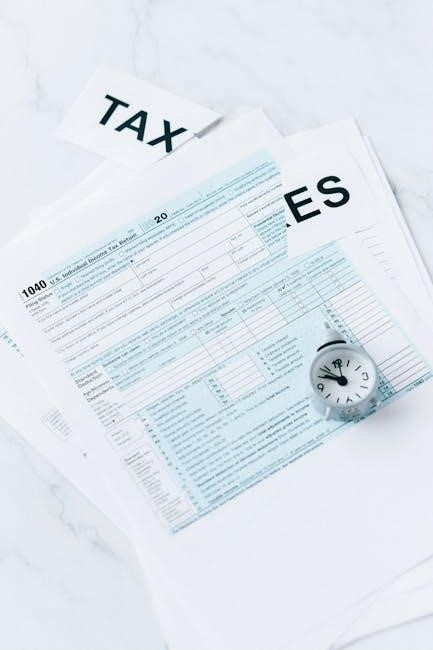
Specifically‚ you’re required to file if you’re claiming the Foreign Tax Credit on your U.S. tax return. Even if the foreign tax paid is relatively small‚ filing Form 1116 is necessary to properly calculate and claim the credit. Estates and trusts with foreign tax liabilities also need to utilize this form.
The Form 1116 PDF instructions clarify that you must file if you paid or accrued foreign taxes that you’re eligible to claim as a credit against your U.S; tax liability. It’s crucial to determine if your foreign tax qualifies and to accurately report all relevant information on the form to avoid potential issues with the IRS.
Understanding the Foreign Tax Credit
The Foreign Tax Credit‚ facilitated through Form 1116 PDF‚ is designed to prevent double taxation of income earned abroad by U.S. citizens and residents. When you earn income in a foreign country and pay taxes on it‚ the U.S. allows you to claim a credit for those foreign taxes paid against your U.S. tax liability.
This credit isn’t a dollar-for-dollar reduction of your U.S. taxes. Instead‚ it’s limited based on a ratio of your foreign-source income to your total income. The purpose of this limitation is to ensure fairness and prevent the credit from eliminating your U.S. tax obligation entirely.
Effectively‚ the credit acknowledges that the income has already been taxed by a foreign government. Utilizing Form 1116 allows taxpayers to meticulously calculate the allowable credit‚ ensuring compliance with U.S. tax laws while avoiding being taxed twice on the same income. Understanding the limitations is key to maximizing the benefit.
Types of Foreign Taxes Eligible for Credit
When completing Form 1116 PDF‚ understanding which foreign taxes qualify for the credit is essential. Generally‚ income taxes imposed by a foreign country are eligible. This includes taxes levied on wages‚ salaries‚ interest‚ dividends‚ and other forms of income.
However‚ not all foreign taxes qualify. Taxes that are not considered income taxes‚ such as sales taxes‚ value-added taxes (VAT)‚ or property taxes‚ are typically not eligible for the Foreign Tax Credit. While these taxes may be legitimate expenses‚ they don’t fall under the definition of income tax as defined by the IRS.
Furthermore‚ certain taxes may be excluded or limited based on treaties between the U.S. and the foreign country. Form 1116 instructions provide guidance on specific treaty provisions. Careful review of the tax paid and its nature is crucial for accurate credit calculation and avoiding potential issues during tax filing.
General Rules for Claiming the Credit
Successfully claiming the Foreign Tax Credit using Form 1116 PDF requires adherence to specific rules. Firstly‚ you must have paid or accrued foreign taxes to a foreign country. The credit is limited to the amount of U.S. tax liability on your foreign-sourced income.
You can’t claim a credit for taxes that exceed your U.S. tax liability on that income. Furthermore‚ the credit is not available for taxes that are exempt or reduced by a tax treaty. Proper documentation of foreign taxes paid or accrued is paramount‚ including payment dates and amounts.
Form 1116 requires detailed calculations to determine the allowable credit. Utilizing the correct exchange rates is also critical. Taxpayers must choose either the cash or accrual method for determining exchange rates and apply it consistently. Careful attention to these rules ensures accurate credit calculation and compliance with IRS regulations.
Calculating the Foreign Tax Credit Limitation
Determining the Form 1116 PDF limitation is a multi-step process crucial for maximizing your Foreign Tax Credit. It begins with identifying your foreign-source income‚ categorized by passive and general category income. This income is then used to calculate a foreign tax credit ratio.
This ratio represents the proportion of your total taxable income derived from foreign sources. Next‚ you multiply your U.S. tax liability by this ratio to establish the credit limitation. This limitation dictates the maximum foreign tax credit you can claim.
Form 1116 provides worksheets to guide you through these calculations. Remember‚ the limitation prevents you from claiming a credit exceeding your U.S. tax obligation on foreign income. Accurate calculation is vital for avoiding potential IRS scrutiny and ensuring compliance with tax laws.
Step 1: Determining Foreign Source Income
The initial step in completing Form 1116 PDF involves meticulously determining your income from sources outside the United States. This requires careful categorization‚ distinguishing between income considered “general category” and “passive category.” General category income typically includes earnings from business activities and certain capital gains.
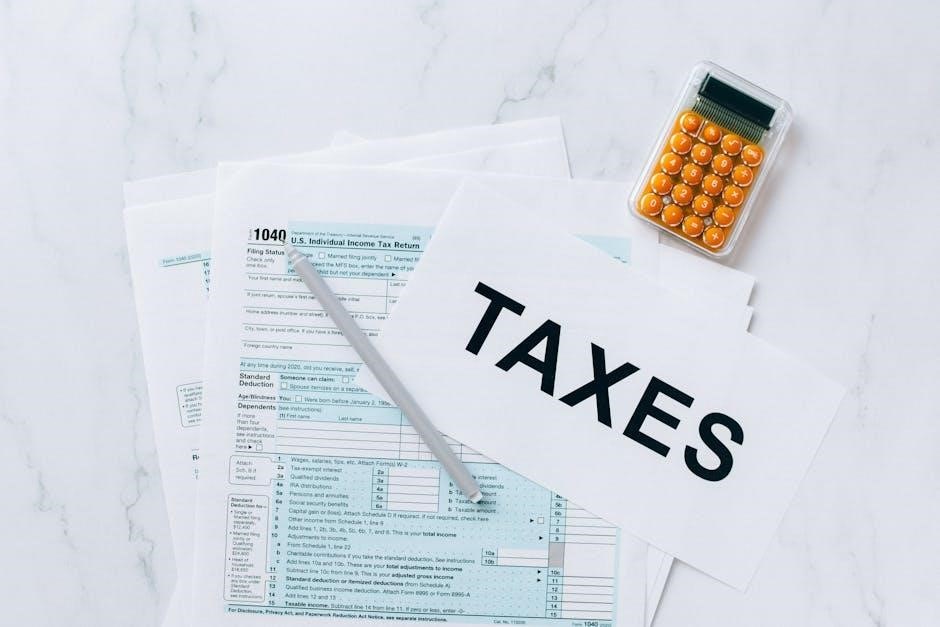
Passive category income encompasses items like dividends‚ interest‚ and royalties. Form 1116 instructions provide detailed guidance on classifying various income types. Accurate categorization is paramount‚ as it directly impacts the subsequent calculation of the foreign tax credit limitation.
You’ll need to identify the specific country or countries generating this income. Thorough documentation‚ including source documents like 1099s and foreign tax statements‚ is essential. This step lays the foundation for a correct and defensible foreign tax credit claim‚ ensuring compliance with IRS regulations.

Step 2: Calculating the Foreign Tax Credit Ratio
Once foreign source income is determined on Form 1116 PDF‚ the next crucial step is calculating the foreign tax credit ratio. This ratio represents the proportion of your total income that is sourced from outside the U.S.‚ effectively limiting the amount of foreign tax you can claim as a credit.
The ratio is computed by dividing your total foreign source income (from both general and passive categories) by your worldwide taxable income. This calculation is fundamental to preventing a credit exceeding your tax liability. The Form 1116 instructions provide a dedicated worksheet to guide this process.
Accurate calculation of this ratio is vital. It directly impacts the maximum foreign tax credit you can utilize‚ potentially reducing your overall U.S. tax burden. Maintaining detailed records of both foreign and U.S. income sources is essential for a defensible calculation.
Step 3: Applying the Limitation to Foreign Taxes Paid
After determining the foreign tax credit ratio on Form 1116 PDF‚ the next step involves applying this limitation to the foreign taxes you’ve actually paid or accrued. This ensures you don’t claim a credit exceeding your U.S. tax liability on foreign-sourced income.
Multiply your total foreign taxes paid (or accrued) by the calculated foreign tax credit ratio. The resulting amount represents the maximum foreign tax credit you can claim for the tax year. Any foreign taxes exceeding this limitation cannot be credited in the current year‚ but may be carried back one year or forward ten years.
The Form 1116 instructions offer a clear worksheet to facilitate this calculation. Careful attention to detail is crucial‚ as an incorrect application of the limitation can lead to audit issues. Proper documentation supporting both foreign taxes paid and the income generating those taxes is essential.
Form 1116 Sections Explained
Form 1116 PDF is structured into distinct parts to systematically calculate the Foreign Tax Credit. Understanding each section is vital for accurate completion. Part I gathers general information‚ including your name‚ address‚ and taxpayer identification number‚ establishing your filing details.
Part II focuses on income sourced outside the U.S.‚ requiring detailed categorization of various income types – passive‚ general‚ and active – each impacting the credit calculation differently. Part III details the foreign taxes paid or accrued‚ demanding specific information about the country‚ tax type‚ and amount paid.
The form’s instructions walk you through each line item‚ providing worksheets to aid in calculations. Additional schedules may be required depending on your specific circumstances. Thoroughly reviewing the instructions alongside the Form 1116 PDF is highly recommended for a smooth filing process.
Part I: General Information
Part I of Form 1116 PDF serves as the foundational section‚ collecting essential identifying details. This part begins with your name‚ address‚ and Social Security Number (SSN) or Individual Taxpayer Identification Number (ITIN). Accurate entry of this information is paramount for proper processing by the IRS.
You’ll also indicate your filing status – single‚ married filing jointly‚ etc. – which can influence the credit calculation. A crucial element is identifying whether you are claiming a credit for taxes paid to a single foreign country or multiple countries; this dictates how you proceed through the form.
The instructions for Form 1116 walk you through each line item‚ ensuring clarity. Carefully review these instructions as errors in Part I can cause delays or rejection of your claim. This section establishes the basic framework for your foreign tax credit calculation.
Part II: Income From Sources Outside the U.S.

Part II of Form 1116 PDF meticulously details your income derived from sources outside the United States. This section requires a comprehensive listing of various income types‚ including wages‚ salaries‚ dividends‚ interest‚ and royalties earned abroad. You must categorize each income source by the specific foreign country where it originated.
Accurate reporting is vital‚ as this income forms the basis for calculating the foreign tax credit limitation. The instructions for Form 1116 provide detailed guidance on determining whether income is genuinely from a foreign source‚ addressing complexities like sales and services.
Remember to report all income in U.S. dollar equivalents‚ utilizing appropriate exchange rates (discussed later in the form). This section is critical for establishing the portion of your income subject to foreign taxes‚ directly impacting the credit you can claim. Thoroughness and precision are key when completing Part II.
Part III: Foreign Taxes Paid or Accrued
Part III of Form 1116 PDF focuses on documenting the foreign taxes you’ve either paid or accrued. This includes income taxes‚ withholding taxes‚ and certain other taxes levied by foreign governments. You must specify the country to which each tax payment relates‚ ensuring clear traceability.
The instructions for Form 1116 clarify which taxes qualify for the credit‚ and provide guidance on converting foreign currency amounts into U.S. dollars using appropriate exchange rates. Accrued taxes‚ relevant for those using the accrual method‚ represent taxes you have a legal obligation to pay‚ even if not yet paid.
Detailed record-keeping is paramount in this section. Maintain documentation supporting each tax payment or accrual‚ as the IRS may request verification. Accurate completion of Part III is essential for maximizing your foreign tax credit and avoiding potential discrepancies during tax audits.
Exchange Rates and Form 1116
Form 1116 PDF necessitates converting foreign taxes and income into U.S. dollars‚ making accurate exchange rates critical. The IRS provides guidance on acceptable methods for determining these rates‚ impacting the credit calculation.
Generally‚ you can use the exchange rate in effect when the tax was paid or accrued. If utilizing the accrual method‚ the average exchange rate for the tax year is often appropriate‚ as highlighted in the form’s instructions. Consistency in applying your chosen method is vital.
The IRS website and other financial resources offer historical exchange rate data. Maintaining detailed records of the rates used for each transaction is crucial for audit purposes. Incorrect exchange rates can lead to an inaccurate foreign tax credit‚ potentially resulting in penalties or adjustments.
Accrual vs. Cash Method for Exchange Rates
Form 1116 PDF requires taxpayers to select either the cash or accrual method when determining exchange rates for foreign tax credit calculations. The choice significantly impacts the reported amounts and potential credit value.
The cash method utilizes the exchange rate on the date the foreign tax was paid. Conversely‚ the accrual method employs the rate when the tax liability was incurred‚ even if payment occurs later. Generally‚ if you choose the accrual method‚ the average exchange rate in effect during the entire tax year is typically used.
Consistency is paramount; once a method is chosen‚ it should be applied consistently in subsequent years unless a change is approved by the IRS. The form’s instructions provide detailed guidance on each method‚ including worksheets to aid in accurate calculations. Selecting the appropriate method can maximize your foreign tax credit.
Where to Find Applicable Exchange Rates
Form 1116 PDF necessitates accurate exchange rates for converting foreign taxes paid or accrued into U.S; dollars. Fortunately‚ several reliable sources provide this crucial information for tax purposes.
The IRS provides official exchange rates on its website‚ typically published in Publication 553‚ Simplified Methods for Calculating Exchange Rates. These rates are considered authoritative for tax reporting. Additionally‚ the U.S. Federal Reserve Board (FRB) publishes daily exchange rates‚ offering another dependable resource.
Commercial banks and financial institutions also offer historical exchange rate data‚ though it’s essential to verify their accuracy against IRS or FRB sources. When using online converters‚ ensure they are reputable and provide rates traceable to official sources. Maintaining documentation of the exchange rates used is vital for supporting your Form 1116 PDF calculations during a potential audit.
Common Mistakes to Avoid on Form 1116
Form 1116 PDF‚ while comprehensive‚ presents opportunities for errors. A frequent mistake involves incorrectly calculating foreign source income‚ leading to an inaccurate foreign tax credit limitation. Failing to properly categorize income and expenses can significantly impact the final credit amount.

Another common error is using incorrect exchange rates when converting foreign taxes paid into U.S. dollars. Always utilize official IRS or FRB rates and maintain thorough documentation. Many taxpayers also struggle with the foreign tax credit limitation calculation‚ often overlooking specific income categories or applying the wrong ratios.
Insufficient record-keeping is a critical oversight. Keep detailed records of foreign income‚ taxes paid‚ and exchange rates used. Finally‚ neglecting to review the Form 1116 PDF instructions carefully can lead to missed credits or incorrect reporting. Diligence and accuracy are key to maximizing your foreign tax credit.
Proper Documentation and Record Keeping
Form 1116 PDF claims necessitate meticulous documentation. Retain all records substantiating foreign income‚ including statements from foreign employers or payers‚ and documentation of any foreign taxes paid or accrued. This includes official tax receipts‚ payment confirmations‚ and any relevant withholding statements.
Crucially‚ document the exchange rates used for conversions‚ referencing the source (e.g.‚ IRS‚ Federal Reserve Board). Keep records demonstrating how you calculated your foreign source income and the foreign tax credit limitation. Detailed spreadsheets or organized files are highly recommended.
For accrual method taxpayers‚ maintain records supporting the accrual dates and the corresponding exchange rates. The IRS may request this documentation during an audit‚ so accessibility is vital. Proper record-keeping not only supports your claim but also simplifies the process and minimizes potential issues when utilizing the Form 1116 PDF;
Resources for Form 1116 Assistance
Navigating Form 1116 PDF can be complex; fortunately‚ numerous resources offer assistance. The official IRS website (irs.gov) provides the form‚ detailed instructions‚ and relevant publications like Publication 514‚ “Foreign Tax Credit for Individuals.” These resources are foundational for understanding the requirements.

Tax software packages‚ such as TurboTax‚ often include guided interviews and automated calculations for Form 1116‚ simplifying the process. Professional tax preparers specializing in international tax can provide personalized advice and ensure accurate filing.
The IRS Taxpayer Assistance Centers offer in-person support‚ though appointments may be necessary. Online forums and communities dedicated to tax topics can provide peer-to-peer assistance and insights. Remember to verify information from unofficial sources with official IRS guidance when completing your Form 1116 PDF.
Downloading and Accessing the Form 1116 PDF

Obtaining the Form 1116 PDF is straightforward through the official IRS website‚ irs.gov. Simply search for “Form 1116” in the search bar‚ and the latest version will be readily available for download. The IRS typically provides the form in a universally accessible PDF format‚ ensuring compatibility across various devices.
Alternatively‚ many tax software providers‚ like TurboTax and H&R Block‚ automatically incorporate the current Form 1116 PDF within their programs. This eliminates the need for separate downloading and ensures you’re using the correct version.
Ensure you download the form specifically for the tax year you are filing. Older versions may contain outdated instructions or schedules. Always verify the form number and year before completing it to avoid potential processing delays or rejections by the IRS. Accessing the correct Form 1116 PDF is the first step towards a successful foreign tax credit claim.